
The Magic Behind Jaisalmer’s Golden City Nickname

The Ultimate Luxury Stay Guide to Ranthambore Tiger Resort
March 6, 2026
The Architecture of Umaid Bhawan: Art Deco Meets Rajputs
March 7, 2026The Thar Desert holds many secrets, but none are as visually arresting as the city of Jaisalmer. Rising like a mirage from the undulating sand dunes, the city earns its “Golden City” moniker not through myth, but through a breathtaking geological and architectural harmony. When you first arrive via a professional Jaisalmer cab service, the transition from the arid plains to the honey-hued ramparts of the fort is a sensory experience that defines Rajasthani tourism. The nickname is a tribute to the yellow sandstone used in nearly every structure, which captures the sunlight and transforms the urban landscape into a glowing masterpiece of amber and gold.
The Geological Foundation of the Glow
The secret to the city’s radiant appearance lies deep within the earth. The Jaisalmer formation consists of Jurassic-era yellow sandstone, a material that is both sturdy for construction and incredibly unique in its pigment. Unlike the red sandstone of Jaipur or the white marble of Udaipur, this specific stone contains a high concentration of minerals that react to light. During the afternoon, the stone appears pale and creamy, but as the sun begins its descent, the iron oxides within the rock seem to ignite. This natural phenomenon is why travelers often book a Jaisalmer sightseeing tour specifically timed for the “Golden Hour,” where the distinction between the desert sands and the city’s walls virtually disappears.
Sonar Quila: The Living Golden Fortress
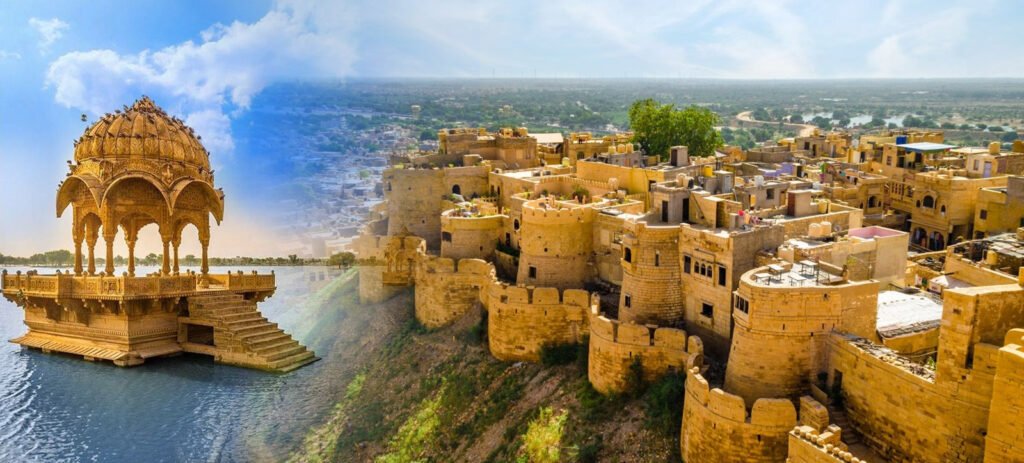
At the heart of this golden wonder is the Jaisalmer Fort, also known as Sonar Quila (Golden Fort). Built in 1156 AD by the Rajput ruler Rawal Jaisal, it is one of the few “living forts” in the world, housing nearly one-fourth of the city’s old population. The architecture here is a masterclass in desert survival and aesthetic brilliance. The intricate carvings on the balconies (jharokhas) and the massive sandstone blocks were joined without mortar, relying instead on gravity and precise interlocking. This engineering feat ensures that the fort remains a monolithic golden crown atop Trikuta Hill. Navigating the narrow, winding alleys of the fort feels like stepping back into a medieval era where gold was the only color that mattered.
Haveli Architecture and Intricate Artistry
Beyond the fort, the “Golden City” nickname is reinforced by the opulent havelis built by wealthy merchants of the 19th century. Patwon Ki Haveli, Salim Singh Ki Haveli, and Nathmal Ki Haveli are prime examples of how the yellow sandstone was treated like fine lace. The stonemasons of Jaisalmer were legendary for their ability to carve heavy rock into delicate, breathable screens. These structures were designed not just for beauty, but to provide natural ventilation against the harsh desert heat. When you hire a reliable taxi in Jaisalmer to navigate between these historic manors, you realize that the golden theme isn’t just a facade; it is a structural philosophy that permeates the entire city.
The Role of the Thar Desert Sun
The sun is the ultimate protagonist in the story of Jaisalmer’s name. In most cities, the sun is merely a source of light; in Jaisalmer, it acts as a painter. The interaction between the intense solar radiation of the Thar and the porous yellow sandstone creates a visual warmth that is hard to replicate elsewhere. At dawn, the city is a soft, waking ochre. By midday, it is a bright, shimmering tan. But at sunset, the city truly earns its title, turning a deep, burnt orange that looks almost metallic. This cycle of light is why photographers and historians alike are drawn to the city year after year, documenting a landscape that feels precious and gilded.
Cultural Heritage and the Golden Spirit
The “Golden” nickname also extends to the warmth of the local culture. The people of Jaisalmer have preserved a way of life that is as rich as the stone they live in. From the vibrant folk music played on the kamanicha to the bright turbans and traditional attire, the human element adds a layer of vitality to the stone surroundings. The local festivals, particularly the Desert Festival, showcase the city’s heritage through camel races, turban tying, and folk dances, all set against the backdrop of the glowing fort. This synergy between the physical environment and the cultural vibrancy ensures that the “Golden City” is more than just a marketing slogan; it is a living, breathing identity.
Modern Jaisalmer: Preserving the Hue
In the modern era, maintaining the “Golden” aesthetic is a matter of both pride and strict regulation. New constructions are encouraged to use the traditional yellow stone to ensure the city’s visual continuity remains intact. This dedication to architectural harmony allows Jaisalmer to remain a timeless destination. For the modern traveler, the ease of exploring this golden landscape has been vastly improved by dedicated local transport services. Whether you are heading to the Sam Sand Dunes for a sunset safari or exploring the quiet cenotaphs of Bada Bagh, the consistency of the golden stone serves as a constant companion, grounding the travel experience in history and natural beauty.