

Jawai Safari Guide: Leopards, Hills & Rabari Traditions

Jaisalmer in 2 Days: Top Sightseeing & Desert Itinerary
November 18, 2026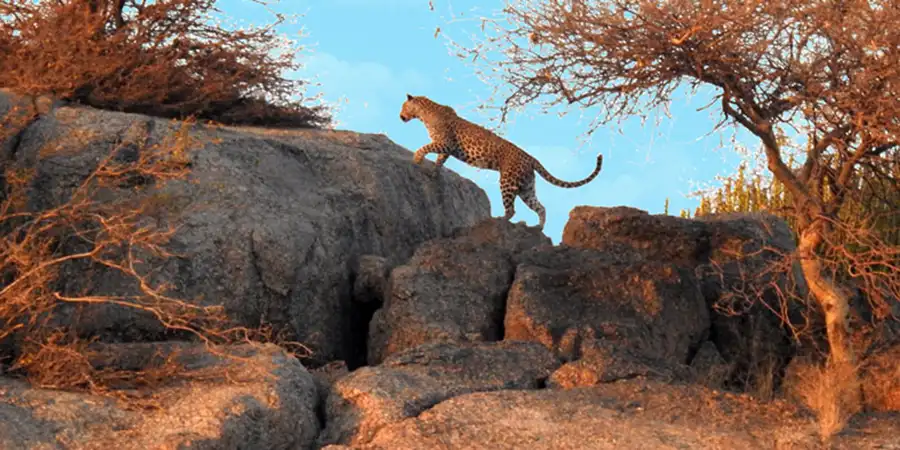
Nestled in the Pali district of southern Rajasthan, Jawai offers an extraordinary wilderness experience that defies the conventional boundaries of wildlife tourism. Unlike traditional national parks with fenced perimeters and dense jungle canopies, this region is an open, unfenced landscape where ancient granite hills rise dramatically from scrublands and wetlands. Here, apex predators and pastoral communities share the same terrain in an unbroken pact of peaceful coexistence. At The Jawai Sagar, field trackers and local naturalists witness this remarkable ecological balance every day, guiding travelers through one of India’s most captivating wildlife destinations.
The Granite Hills and Geological Wonder of Jawai
The defining visual feature of the Jawai landscape is its colossal, wind-sculpted granite formations. Geologically dating back millions of years, these monolithic boulders form natural caves, crevices, and elevated rocky outcrops that serve as ideal dens for big cats. Because the terrain lacks thick forest cover, wildlife viewing here relies on understanding rock topography, wind direction, and animal movement patterns across open scrub.
During early mornings and late afternoons, the golden sunlight illuminates the smooth grey granite, creating striking visibility for wildlife enthusiasts and photographers. Experienced trackers read subtle environmental cues—such as alarm calls from langurs, peacocks, or lapwings—to locate leopards resting on high ledges or navigating the rocky slopes.
Experiencing the Jawai Leopard Safari
Embarking on a Jawai Leopard Safari is fundamentally different from visiting a standard tiger reserve. With over fifty wild leopards thriving across the surrounding hills and villages, sightings occur in a remarkably natural, unscripted environment. Safaris are conducted in customized open-top four-wheel-drive vehicles driven by seasoned local trackers who know the individual territories, behavioral habits, and favored resting caves of the resident leopards.
Beyond the big cats, the broader ecosystem supports rich biodiversity around the Jawai Bandh, western Rajasthan’s largest reservoir. Guests regularly encounter diverse wildlife across distinct habitat zones:
- Wetland and Reservoir Species: Marsh crocodiles basking along the rocky banks of Jawai Dam, alongside over 200 species of resident and migratory birds including flamingos, Sarus cranes, pelicans, and bar-headed geese.
- Scrubland and Nocturnal Fauna: Indian striped hyenas, golden jackals, jungle cats, Indian foxes, and nilgai roaming the base of the Aravalli foothills.
- Ethical Tracking Practices: Responsible wildlife observation requires maintaining respectful distances, keeping noise levels minimal, never blocking an animal’s path, and avoiding flash photography so the leopards remain undisturbed in their natural habitat.
Sacred Coexistence and Rabari Pastoral Traditions
What truly elevates Jawai from a scenic wildlife destination to a global conservation model is the indigenous Rabari community. Recognizable by their distinctive crimson turbans, white attire, and silver jewelry, the Rabari are semi-nomadic pastoralists who have herded cattle, sheep, and goats across these hills for centuries.
For the Rabari, leopards are not viewed as threats to be eradicated, but as sacred guardians associated with local deities and hilltop shrines. Even when livestock is occasionally lost to predation, the community refrains from retaliation, relying instead on traditional ecological knowledge and state compensation mechanisms. In turn, the leopards have grown accustomed to the daily rhythm of shepherds walking past rocky outcrops, resulting in zero recorded attacks on humans in the region. Exploring rural villages alongside local guides allows visitors to witness this living heritage firsthand, observing traditional mud-and-stone homes, ancient cave temples, and the deep mutual respect binding people and predators.
Planning Your Stay and Practical Safari Tips
To fully appreciate the slow rhythm of the wilderness, travelers should plan a stay of at least two to three nights. Selecting the best resort in Jawai ensures seamless access to private safari zones, knowledgeable local trackers, and authentic regional hospitality close to the hills and dam backwaters. The Jawai Sagar positions guests right beside these prime wildlife corridors while offering tranquil views of the surrounding terrain.
When preparing for your journey, keep these practical guidelines in mind:
- Optimal Season: October through March offers pleasant daytime temperatures, crisp mornings, and peak migratory bird activity around the reservoir. Summer months from April to June provide higher leopard visibility near water sources during early morning and late evening drives.
- Essential Gear: Pack neutral earth-toned clothing that blends with the rocky scrub, a pair of quality binoculars, high-SPF sunscreen, sunglasses, and a telephoto lens for wildlife photography.
- Pacing Your Itinerary: Combine morning and evening jeep drives with a guided village walk or lakeside birding session to experience both the ecological and cultural depth of the region.
By approaching the landscape with patience and respect for local customs, every expedition into Jawai becomes a meaningful encounter with wild India at its most harmonious.