
Mastering Quant & Verbal: Top Tips for IPMAT & BBA Exams

Feel the Desert Spirit: Discovering the Charm of Sam Sand Dunes
February 16, 2026
Udaipur Uncovered: Top Attractions, Food & Hidden Gems
February 16, 2026
Success in management entrance exams is not merely about hard work; it is about strategic preparation, consistent practice, and the right guidance. As the competition for premier institutes like the IIMs (Indore, Rohtak, Ranchi) and top B-schools increases, students must adopt a rigorous approach to crack the Integrated Program in Management Aptitude Test (IPMAT) and other BBA entrance exams. Whether you are just starting your journey or are in the final stages of revision, finding the most structured IPMAT & BBA Preparation in Udaipur is the first critical step toward securing a seat in these prestigious institutions. A well-rounded study plan that balances Quantitative Ability and Verbal Ability is essential for navigating the complexities of these competitive tests.
Decoding the Exam Pattern and Syllabus
Before diving into specific subjects, it is imperative to understand the battlefield. Exams like IPMAT, JIPMAT, NPAT, and SET differ slightly in their pattern, but the core pillars remain Quantitative Ability (QA), Verbal Ability (VA), and Logical Reasoning (LR). Understanding the weightage of each section allows aspirants to allocate their time effectively. For instance, IPMAT Indore places a significant emphasis on higher mathematics, whereas other exams might lean heavily on arithmetic and data interpretation. Familiarizing yourself with the specific requirements of each test ensures that your preparation is targeted and efficient. This foundational knowledge prevents wasted effort on irrelevant topics and keeps the focus on high-yield areas that maximize scores.
Strategies for Quantitative Ability Mastery
Quantitative Ability is often the most feared section, yet it is the most scoring if approached correctly. The key to mastering QA lies in building a strong conceptual framework. Do not rely solely on rote memorization of formulas; instead, understand the underlying logic behind mathematical concepts. Start with Arithmetic, covering percentages, profit and loss, ratio and proportion, and time-speed-distance. These topics form the backbone of the section and are frequently tested. Once you have mastered the basics, move on to Algebra and Number Systems. For IPMAT specifically, Higher Mathematics topics like Matrices, Determinants, and Calculus are crucial. Regular practice is non-negotiable. Solve topic-wise tests to identify weak areas and work on them systematically. Additionally, learning mental math techniques and Vedic math tricks can significantly improve calculation speed, which is a decisive factor in timed exams.
Elevating Verbal Ability and Reading Comprehension
Verbal Ability tests your command over the English language and your ability to comprehend complex texts. To excel in this section, you must cultivate a daily reading habit. Read diverse materials ranging from newspapers and editorials to fiction and non-fiction books. This not only improves reading speed but also enhances vocabulary and contextual understanding. For vocabulary, focus on learning root words, prefixes, and suffixes rather than memorizing isolated words. Grammar is another pillar of VA; ensure you have a solid grasp of parts of speech, subject-verb agreement, and tenses. Practice Reading Comprehension (RC) passages regularly, focusing on identifying the main idea, tone, and inference. Accuracy in RC is often lower than in other sections, so practice is essential to bridge the gap between understanding a text and answering specific questions about it correctly.
Leveraging Technology in Preparation
In the modern educational landscape, traditional methods alone may not suffice. The integration of technology into learning has revolutionized how students prepare for competitive exams. Utilizing advanced tools can provide personalized insights into your performance. For example, enrolling in AI-Powered IPMAT & Commerce Coaching in Udaipur allows students to benefit from adaptive learning platforms that identify individual strengths and weaknesses. These AI-driven systems analyze mock test performance to suggest tailored revision plans, ensuring that no topic is left weak. This data-driven approach removes the guesswork from preparation, allowing students to focus their energy where it matters most. Technology also facilitates access to high-quality video lectures and interactive doubt-solving sessions, making learning continuous and accessible.
The Importance of Mock Tests and Analysis
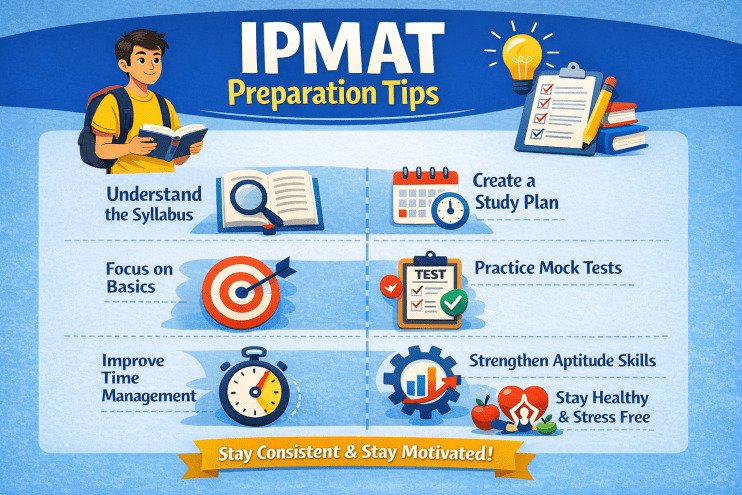
Mock tests are the dress rehearsal for the main event. They simulate the actual exam environment, helping students manage exam pressure and time constraints. However, taking a mock test is only half the battle; the real value lies in the analysis that follows. After every mock, spend time reviewing every question—both correct and incorrect. Analyze why you got a question wrong: was it a conceptual error, a calculation mistake, or a lack of time? This reflection helps in refining strategies and avoiding repeated mistakes. Aim to take full-length mock tests weekly and increase the frequency as the exam date approaches. This consistent exposure to exam-level questions builds endurance and confidence, ensuring that you are not caught off guard on the actual day.
Developing a Holistic Study Plan
A scattered approach rarely yields results. Students need a structured roadmap that covers the entire syllabus while leaving ample time for revision. Creating a balanced timetable that allocates time for school academics (for 12th graders) and entrance exam preparation is vital. Consistency is more important than intensity; studying for four hours daily is more effective than cramming for twelve hours once a week. Your plan should also include breaks and leisure activities to prevent burnout. Mental and physical well-being plays a massive role in cognitive performance. Ensure you are getting adequate sleep and nutrition. For a detailed breakdown of how to structure your timeline effectively, consulting a comprehensive UG Management Programs guide can provide the clarity needed to navigate the months leading up to the exam.
Final Thoughts on Exam Strategy
Ultimately, cracking IPMAT and BBA entrance exams requires a blend of knowledge, speed, and accuracy. It is a marathon, not a sprint. Stay disciplined, trust the process, and remain positive throughout the journey. Surround yourself with motivated peers and mentors who can guide you through the tough phases. Remember that every topper was once a beginner who refused to give up. By focusing on conceptual clarity in Quant, reading consistency in Verbal, and strategic analysis of Mock Tests, you can maximize your potential. With the right mindset and resources at your disposal, achieving your dream of entering a top management institute is entirely within reach.