
The Story of Queen Rudabai and the Adalaj Stepwell

Global Opportunities: The Value of a Hospitality Degree
July 17, 2026
Why Mahatma Mandir Is the Pride of Gandhinagar City
July 17, 2026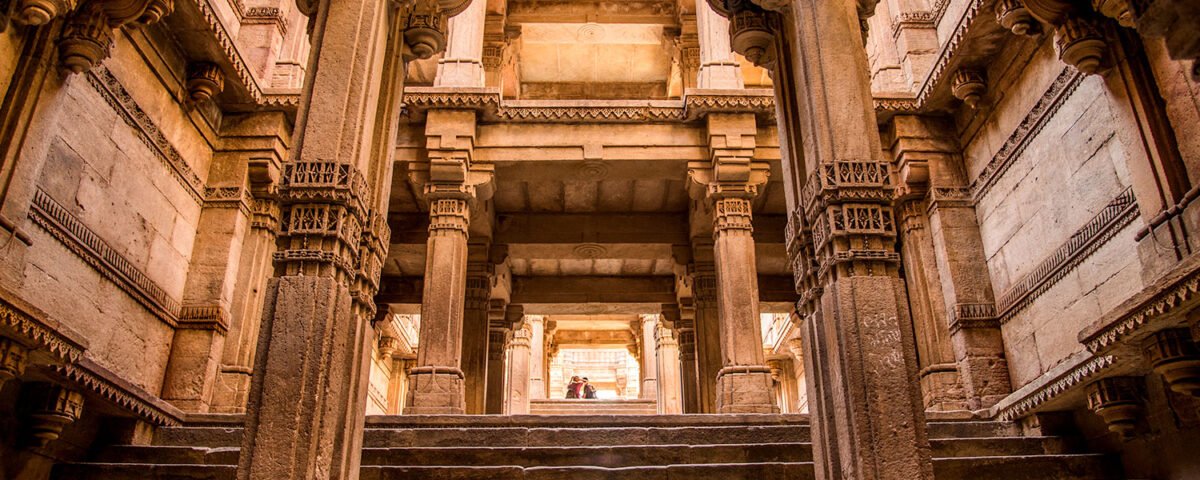
The architectural landscape of Gujarat is richly intertwined with stories of devotion, resilience, and profound sacrifice. Among the region’s historical marvels, the Adalaj Stepwell, locally known as Adalaj ni Vav, stands out as a unique structure that blends utilitarian design with a deeply moving human tragedy. Located just a short distance from the bustling urban center of modern Ahmedabad, this five-story deep subterranean structure is more than just an ancient water reservoir. It stands as a physical monument to the enduring love and final sacrifice of Queen Rudabai. Travelers looking to experience this piece of history firsthand often seek premium accommodations in the city, exploring choices like the best 5 star hotel in Ahmedabad to balance historical exploration with contemporary comfort.
The Historic Origins of Dandai Desh
The chronicle of the stepwell begins in the late 15th century within the kingdom of Dandai Desh, a territory heavily impacted by arid climates and acute water shortages. The ruler of this region, Rana Veer Singh of the Vaghela dynasty, recognized the immense struggles his subjects faced in securing clean drinking water. To alleviate their hardships, he envisioned a massive, intricately designed stepwell that would collect rainwater, provide respite to weary travelers, and serve as a communal space for his people. Work on the subterranean structure commenced with great fervor, guided by the king’s deep sense of duty toward his kingdom.
Rana Veer Singh was supported by his deeply revered wife, Queen Rudabai. The queen shared her husband’s vision for the welfare of the kingdom and closely monitored the early phases of the architectural endeavor. However, the region’s geographical vulnerabilities soon caught the attention of neighboring powers, shifting the fate of the kingdom and halting the construction of the ambitious reservoir.
A Kingdom Besieged and a Tragic Turn
The relative peace of Dandai Desh was shattered when the regional Sultan, Mahmud Begada, launched a massive military invasion against the Vaghela kingdom. The conflict intensified rapidly, culminating in a fierce battlefield encounter where Rana Veer Singh was tragically killed. Following the king’s demise, his forces were scattered, and the territory fell entirely under the control of the victorious Sultan.
Mahmud Begada entered the conquered capital and was immediately captivated by the exceptional beauty and poised dignity of the widowed Queen Rudabai. Desiring to legitimize his control over the newly acquired territory and win the queen’s hand, the Sultan presented a formal proposal of marriage. For Queen Rudabai, the situation presented a profound moral and strategic dilemma. She was devastated by the loss of her husband, yet she carried a severe responsibility toward the remaining citizens of the defeated kingdom, who faced uncertain futures under the new regime.
The Bargain of Queen Rudabai
Demonstrating remarkable political astuteness, Queen Rudabai formulated a strategic response to the Sultan’s advance. She agreed to accept the marriage proposal, but placed a single, non-negotiable condition upon the union: the Sultan must fully complete the construction of the stepwell initiated by her late husband. She argued that she could not enter a new marriage until the spiritual and worldly obligations to her late husband’s final public project were entirely fulfilled.
Mahmud Begada, eager to win the queen’s favor and secure the alliance, readily accepted the terms. He reassembled the finest artisans, stone carvers, and architects of the era, instructing them to resume the construction without delay. Under the Sultan’s direct patronage, the project saw an influx of architectural styles, leading to a unique synthesis of Solanki Hindu motifs and Islamic architectural elements that define the structure today.
Architectural Elements of the Monument
As construction progressed over the next few years, the stepwell evolved into an unparalleled masterpiece of subterranean engineering. Built entirely from sandstone, the monument features three distinct entrance gates that converge into a single underground path. The design allows natural light and air to penetrate deep into the lower levels, keeping the internal temperatures nearly six degrees cooler than the scorching surface conditions.
The artistic elements carved into the pillars and lintels tell a story of cultural amalgamation:
- Spiritual Symbols: Intricate carvings of the Kalpavriksha (tree of life) and Ami Khumbha (pot containing the water of life) adorn the stone walls.
- Daily Reflections: Detailed friezes depict women churning buttermilk, musicians performing, and kings inspecting their guards.
- Symmetric Depths: Five tiers of carved galleries stack neatly above the deep circular well pool at the very bottom.
Just as modern professionals value meticulous design when choosing a well-appointed business hotel in udaipur or Ahmedabad for their operational needs, the ancient architects focused heavily on precision, alignment, and long-term durability to ensure the stepwell served generations.
The Final Ultimate Sacrifice
In the year 1498, the final stone was laid, and the spectacular stepwell stood complete. Mahmud Begada arrived at the site to claim his promise and remind the queen of their marital pact. Queen Rudabai requested permission to visit the monument one final time to offer prayers, circumambulate the structure, and seek blessings for the water that would now sustain the kingdom.
Dressed in her royal finery, the queen walked down the grand steps, passing through the carved galleries until she reached the lowest tier beside the deep pool. With prayers for her late husband on her lips, she leaped into the deep waters of the well, choosing ultimate devotion over a forced political union. Her tragic leap transformed the stepwell from a civic utility into a permanent sanctuary of her loyalty and love. Deeply moved by her devotion, the Sultan chose not to alter the structure or damage its carvings, leaving the monument intact as a timeless tribute to the remarkable queen.