

The Essential Guide to Cracking the IPMAT Exam

Is It Worth It? The High Cost of Saying “I Do” in Udaipur
April 3, 2026
From Forts to Desert Safaris: A Three-Day Jaisalmer Adventure
April 3, 2026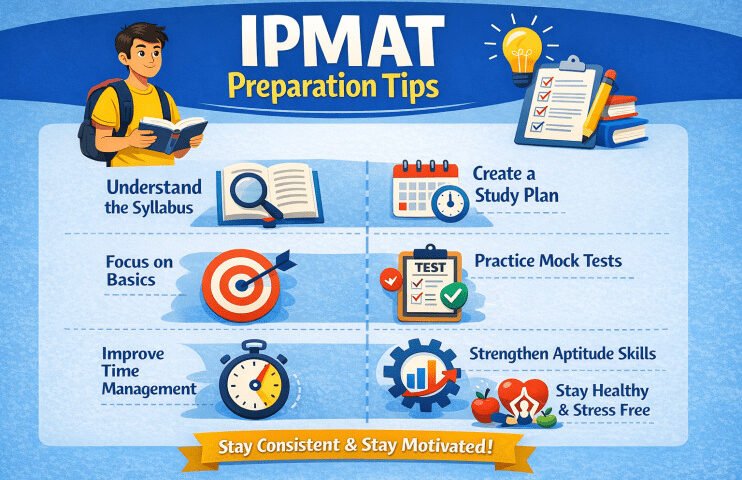
The Integrated Programme in Management Aptitude Test (IPMAT) is more than just an entrance exam; it is a gateway to a prestigious career in management directly after high school. For students in Rajasthan aiming for the Indian Institutes of Management (IIMs), finding the right IPMAT coaching in udaipur is the first step toward transforming a dream into a reality. The challenge of the IPMAT lies not just in its difficulty, but in its unique structure that tests both quantitative ability and verbal proficiency under intense time pressure. Success requires a blend of rigorous academic discipline and a strategic mindset that goes beyond traditional classroom learning.
Understanding the IPMAT Structure and Syllabus
To master the IPMAT, one must first deconstruct the exam pattern. Unlike standard board exams, the IPMAT, particularly the one conducted by IIM Indore, features a mix of Multiple Choice Questions (MCQs) and Short Answer (SA) questions in the Quantitative Ability section. This structure is designed to filter out students who rely on rote memorization, instead rewarding those who possess a deep conceptual understanding. The Verbal Ability section further tests a candidate’s command over the English language, focusing on reading comprehension, vocabulary, and grammar. Navigating this complex landscape requires a structured approach that balances speed with accuracy.
Balancing Boards and Entrance Preparation
One of the most significant hurdles for IPMAT aspirants is the overlap with high school finals. Many students struggle to allocate time between their school curriculum and entrance coaching. For those specializing in business studies and accountancy, enrolling in Class 12th Commerce Board Exam Coaching in Udaipur can provide a dual advantage. This integrated approach ensures that the fundamental concepts of mathematics and logical reasoning are strengthened, which are pivotal for both the board exams and the IPMAT. Consistency is the key here; treating entrance preparation as a daily habit rather than a weekend chore prevents the last-minute burnout that many students face.
Strategic Planning for Quantitative Ability
The Quantitative Ability section is often the most feared part of the exam. It covers topics ranging from Number Systems and Algebra to Geometry and Data Interpretation. However, the secret to high scoring is not knowing every single formula, but knowing which questions to skip. High-scoring candidates focus on building a strong foundation in arithmetic and basic algebra before moving to higher-level concepts. Practicing mental math and short-cut techniques can save precious seconds, allowing for more time to tackle the challenging Short Answer questions where no options are provided to guide you.
Developing a Winning Verbal Ability Strategy
Verbal Ability in IPMAT is not just about knowing “big words.” It is about understanding context, tone, and the logical flow of arguments. To excel, students should engage in active reading of editorials, financial journals, and classic literature. This habit improves reading speed and comprehension—skills that are essential for the long passages found in the exam. Vocabulary should be built through usage rather than list-memorization. Mastery over para-jumbles and sentence correction comes through relentless practice and a keen eye for grammatical nuances, which often make the difference between a good score and a qualifying one.
Avoiding Common Pitfalls in Your Journey
Many brilliant students fail to clear the cutoff because they fall into predictable traps. Over-preparing for one section while neglecting another is a common error. Another major hurdle is the lack of mock test analysis. Simply taking a test is not enough; one must spend double the time analyzing every wrong answer and every unattempted question. Learning from Mistakes in IPMAT Preparation helps in identifying personal weak spots early on. Whether it is poor time management or falling for “trap” questions designed to waste your time, awareness is the best defense against failure.
The Role of Mentorship and Environment
Environment plays a crucial role in competitive exam preparation. Being part of a cohort of like-minded, high-achieving peers fosters a healthy sense of competition and collective growth. A mentor who has “been there and done that” can provide insights that textbooks cannot. At Batch of 30, the focus remains on personalized attention and a curated learning environment. Smaller batch sizes allow for direct interaction, ensuring that no doubt goes unanswered. This level of mentorship is vital for maintaining morale during the long months of preparation, providing both academic guidance and the psychological support needed to stay focused.
The Final Countdown: Mock Tests and Revision
As the exam date approaches, the focus must shift from learning new topics to consolidating existing knowledge. The final month should be dedicated almost exclusively to full-length mock tests. These tests simulate the actual exam environment, helping you build the stamina to sit for two hours with peak concentration. Analyze your performance to see if your strategy for question selection is working. Are you spending too much time on a single puzzle? Are you making silly errors in calculation? Refine your approach with every test. Remember, the goal of a mock test is not just to score high, but to fail in a safe environment so that you don’t repeat those errors on the day of the actual IPMAT.
Conclusion: Your Path to IIM
Cracking the IPMAT is a marathon, not a sprint. It demands resilience, a clear strategy, and the right resources. By focusing on conceptual clarity, balancing your school priorities, and learning from the errors of those who came before you, you position yourself for success. The journey to an IIM is rigorous, but with a disciplined approach and expert guidance, the destination is well within reach. Stay committed to your schedule, keep your curiosity alive, and approach the exam with the confidence of someone who has prepared not just to participate, but to lead.