
Jaisalmer in 3 Days: Complete Sightseeing & Desert Safari Tour

How to Spend 2 Days in Jaisalmer: Full Sightseeing Plan
August 24, 2026
Udaipur to Jaipur: Best Sightseeing Stops & Route Map
August 26, 2026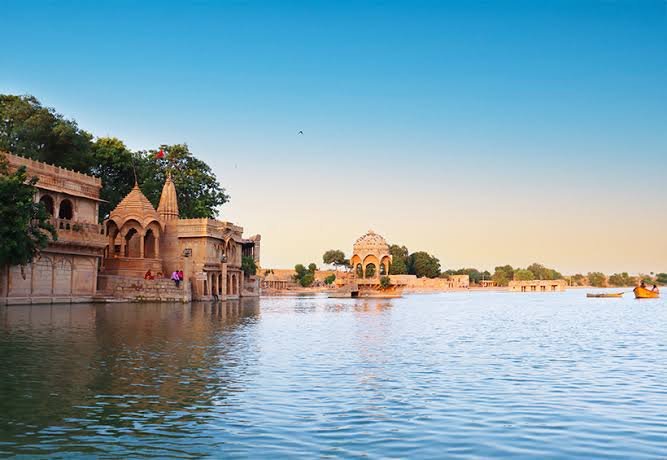
Jaisalmer rises like a mirage from the heart of the Thar Desert, glowing with honey-colored sandstone architecture, ancient fortresses, and endless rolling dunes. Planning a trip to this golden oasis requires balancing historical discovery with desert wilderness. Having guided countless travelers through western Rajasthan, this curated 3-day itinerary combines authentic Rajasthani heritage, architectural marvels, and an immersive safari experience designed to help you make the most of every hour.
Day 1: Exploring the Living Golden Fort and Heritage Havelis
Your journey begins inside the ramparts of Jaisalmer Fort, locally known as Sonar Qila. Built in 1156 AD by Rajput ruler Rawal Jaisal, it remains one of the world’s few functioning living forts, home to roughly a quarter of the old city’s population.
Morning: Walking Through History at Sonar Qila
Wander through the narrow lanes lined with carved balconies, rooftop cafes, and colorful handicraft stalls. Start at the Raj Mahal (Royal Palace) to observe Rajput and Islamic architectural influences, then visit the group of seven intricately carved Jain Temples dating between the 12th and 15th centuries. The yellow sandstone structures feature marble-like stone latticework depicting celestial nymphs, deities, and geometric patterns.
Afternoon: The Grand Havelis of the Old City
Head downhill into the main township to explore the historic mansions built by wealthy merchants:
- Patwon Ki Haveli: A cluster of five independent wings boasting individual jharokhas (balconies) and gold-leaf wall paintings.
- Salim Singh Ki Haveli: Recognized for its peacock-shaped roof structure and vaulted arches.
- Nathmal Ki Haveli: Commissioned by two architect brothers who carved left and right facades independently, yielding striking asymmetry.
Evening: Sunset at Gadisar Lake
Conclude your first day on the banks of Gadisar Lake, a 14th-century rainwater reservoir bordered by small shrines, ghats, and the carved Tilon Ki Pol gateway. Rent a rowboat or simply sit on the stone steps as the evening sky turns amber over the water.
Day 2: Cenotaphs, Abandoned Ruins, and the Thar Desert Safari
On the second day, venture beyond city limits into the arid expanse of the Thar, uncovering local folklore before settling into the dunes.
Morning: Royal Chhatris at Bada Bagh and the Enigma of Kuldhara
Depart early to catch soft morning light at Bada Bagh, a memorial complex containing royal cenotaphs (chhatris) dedicated to Jaisalmer’s Bhatti dynasty rulers. The site overlooks wind energy farms, juxtaposing centuries of history against modern sustainability.
Next, drive southwest to Kuldhara, an 18th-century abandoned village. Legend states that the entire Paliwal Brahmin community deserted their homes overnight to preserve their honor from an oppressive prime minister, leaving behind crumbling stone foundations that evoke a haunting desert stillness.
Afternoon: Checking into Camp and Dune Adventure
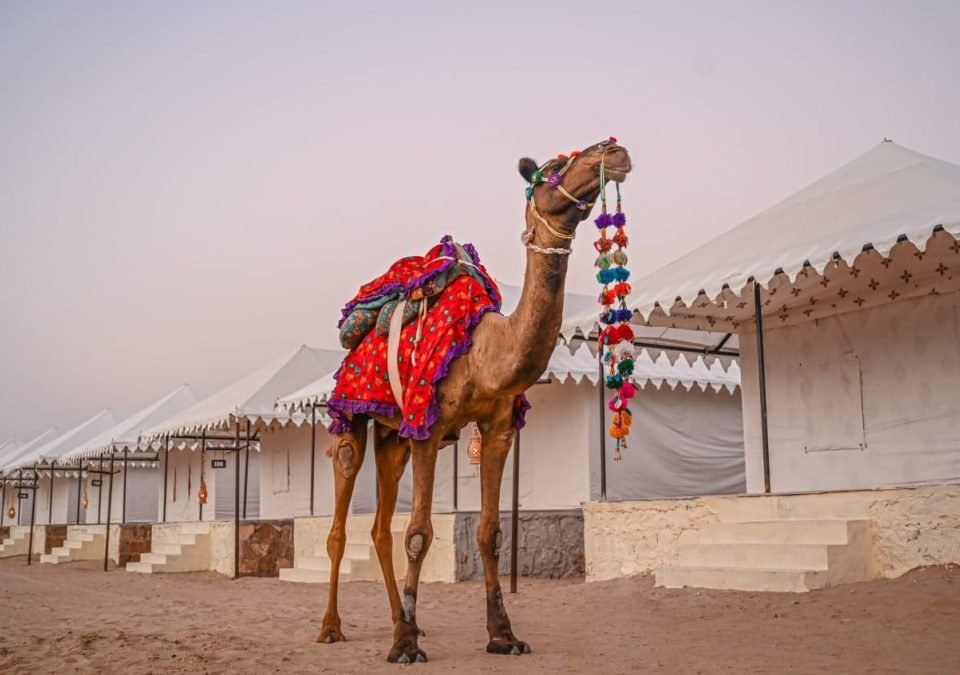
Journey further into the Sam Sand Dunes to stay at a luxury desert camp in jaisalmer. Choosing established accommodations ensures you experience true Rajasthani hospitality with eco-conscious desert practices, modern en-suite amenities, and guided wilderness expeditions. Settle into traditional deluxe tents in jaisalmer that provide insulated protection against desert night temperature drops without sacrificing classic rustic styling.
By late afternoon, embark on an open-top 4×4 dune bashing excursion, followed by a slower-paced camel trek. As the sun sinks below the horizon, the sand shifts from vibrant gold to deep ochre, offering uninterrupted views of the desert skyline.
Evening: Traditional Folk Music and Stargazing
As twilight falls, gather around the camp courtyard for an authentic culture event in jaisalmer featuring the Kalbelia and Manganiyar communities. Their live performances showcase soulful folk melodies played on the kamaicha, dholak, and morchang, accompanied by fire-dancing and traditional footwork. End the night savoring local culinary specialties like Dal Baati Churma, Ker Sangri, and Gatte Ki Sabzi under an expansive desert sky free of light pollution.
Day 3: Desert Wildlife, War History, and Local Bazaars
The final day focuses on desert ecology, national pride, and local craft shopping before departure.
Morning: Desert National Park and Tanot Mata Temple
Rise early to witness sunrise over the dunes, when desert fauna is most active. Take a wildlife drive along the edges of Desert National Park to spot chinkaras (Indian gazelles), desert foxes, and if fortunate, the critically endangered Great Indian Bustard.
Travel north toward the Tanot Mata Temple near the India-Pakistan border, managed by the Border Security Force (BSF). The shrine gained legendary status during the 1965 and 1971 Indo-Pak wars, when unexploded shells landed in the temple courtyard without detonating.
Afternoon: Jaisalmer War Museum and Local Shopping
On your return toward town, stop at the Jaisalmer War Museum (JWM) on the military highway. The facility houses captured military equipment, honors Param Vir Chakra recipients, and contextualizes the strategic importance of the Thar Desert frontier.
Spend your final evening in the markets of Sadar Bazaar, Manak Chowk, and Pansari Bazaar. These bustling streets offer local mirror-work textiles, camel-leather crafts, hand-woven carpets, and fossil-stone souvenirs (Habur stone), giving you a tangible piece of Jaisalmer’s heritage to take home.