
Is a VFX Filmmaking Degree Worth It?

Top 5 Must-Visit Attractions in Abu Road Today
September 28, 2026
How Natural Stone Blocks Are Mined and Used
September 29, 2026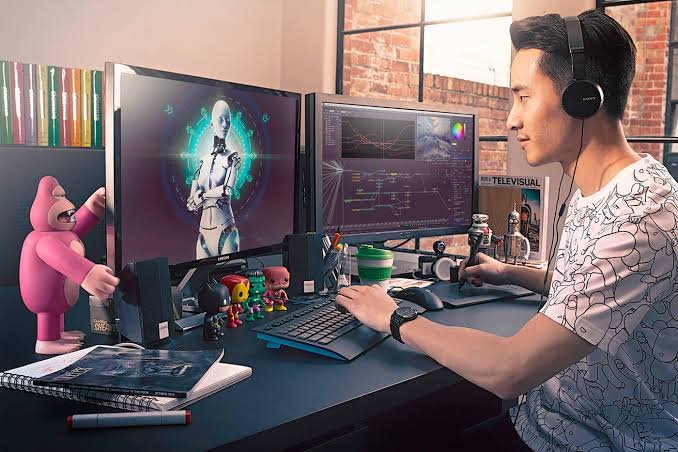
The global entertainment landscape is experiencing an unprecedented surge in demand for high-end digital visuals, cinematic effects, and photorealistic computer-generated imagery. From massive box-office blockbusters and regional cinema to streaming platforms, architectural pre-visualization, and video game development, visual effects have transformed from a post-production afterthought into the foundational engine of contemporary entertainment.
Aspiring artists often confront a pivotal choice at the threshold of their creative careers: should they pursue an academic, vocation-focused curriculum or rely on unstructured self-study? Evaluating whether formal training is worthwhile requires analyzing industry standards, technical workflow integration, and the concrete advantages provided by a recognized educational framework.
The Evolution of Visual Effects and Modern Studio Standards
The modern production pipeline no longer resembles the isolated hobbyist software environments of previous decades. Digital artistry today requires an intricate synergy between technical proficiency, aesthetic judgment, and rigorous production standards. VFX artists must understand asset creation, digital compositing, camera tracking, matchmoving, matte painting, dynamics, particle simulations, and color science.
While online video tutorials can explain basic tool menus or individual button functions, they seldom teach complex multi-tier studio pipelines. Independent learners frequently face knowledge fragmentation, struggling to merge assets across diverse software environments or conform their work to standardized broadcast color profiles.
A structured vocational program bridges this gap by immersing students in simulated production environments. Learners master industry-standard software such as Autodesk Maya, Foundry Nuke, Silhouette, Adobe Premiere Pro, and 3D Equalizer while adhering to established studio delivery benchmarks.
Academic Credibility and Industry Alignment
One of the greatest benefits of structured education is the direct link between conceptual filmmaking principles and technical digital execution. Understanding cinematography, frame rates, lens distortion, perspective, lighting theory, and screen narrative separates a mechanical operator from a visual storyteller.
Enrolling in the B.Voc VFX Film Making Degree provides students with a formal university degree curriculum grounded in practical vocational standards. Unlike broad academic credentials that lean heavily on abstract theory, a Bachelor of Vocation focuses directly on real-time execution, hands-on production hours, and specialized skill development.
This balance between foundational knowledge and practical software application creates graduates capable of stepping directly onto film sets or into post-production houses with minimal onboarding friction.
Practical Advantages of Classroom Immersion
Learning within a dedicated creative space accelerates artistic and technical development through several tangible mechanisms:
- Access to high-end infrastructure, render farms, and calibrated workstations capable of processing resource-intensive visual simulations without hardware limitations.
- Direct mentorship from industry veterans who have solved complex production challenges and can review shots with critical, professional eyes.
- Collaboration with peers across modeling, rigging, rotoscopy, lighting, and compositing departments to simulate realistic studio team dynamics.
- Real-time technical troubleshooting that prevents bad workflow habits from solidifying early in an artist’s career.
- Targeted preparation for rigorous studio entry tests, technical interviews, and client revisions.
Building an Industry-Standard Showreel
In visual effects and entertainment, a creative portfolio or demo reel serves as the ultimate professional passport. Studio hiring managers rarely make talent acquisition decisions based on written resumes alone; they evaluate frame accuracy, edge quality in rotoscopy, lighting integration, dynamic physics believability, and cleanup precision.
Self-taught individuals often populate demo reels with generic tutorial outcomes that experienced recruitment teams recognize immediately. In contrast, guided academic study directs students toward unique, production-grade shot execution. Dedicated portfolio modules ensure student reels demonstrate shot breakdown procedures, wireframes, original live-action background plates, and multi-pass compositing passes that prove an artist understands end-to-end craft.
Regional Training with Global Repercussions
Quality education in cinematic arts is no longer restricted to international hubs or expensive metropolitan capital centers. Regional creative hubs now offer state-of-the-art technological pipelines that connect local talent with global production opportunities. Aspiring digital artists can find established mentorship and production environments right in Rajasthan by joining a premier animation academy in Udaipur .
Studying within an established regional center allows students to develop international-level production capabilities while remaining in an accessible, supportive learning ecosystem. These centers frequently provide industry workshops, placement assistance, and studio networking sessions that keep students connected with hiring trends across India’s booming media and entertainment sector.
Career Trajectories and Industry Scope
Graduates holding formal training in visual effects and cinematic workflows command diverse career opportunities across multiple entertainment and commercial disciplines:
- Compositing Artist: Merging CGI elements with live-action plates seamlessly, matching grain, depth of field, and lighting.
- Matchmove and Camera Tracking Artist: Solving virtual camera trajectories to align digital visual elements with physical camera movement.
- FX TD (Technical Director): Generating realistic environmental phenomena, including water splashes, fire, smoke, and structural destruction.
- Rotoscopy and Prep Artist: Isolating foreground elements cleanly and painting out unwanted rigs, wires, and set equipment.
- Pre-visualization and 3D Asset Artist: Blocking sequences, digital camera lenses, sets, and props before primary filming commences.
Long-Term Value and Return on Investment
Evaluating whether a visual effects filmmaking qualification is worth the investment ultimately hinges on personal career aspirations. For individuals seeking casual creative exploration, self-guided lessons may suffice. However, for those aiming to secure long-term roles on feature films, streaming series, high-budget commercial campaigns, or cutting-edge digital production pipelines, the answer is unequivocally yes.
A recognized vocational degree pairs recognized academic standing with the technical discipline, collaborative experience, and production-tested showreel necessary to thrive in a competitive, multibillion-dollar industry.