
Marble, Granite, or Tiles: A Practical Guide for Homeowners

Plan Your Kashmir Sightseeing Tour: Easy Day-by-Day Guide
October 6, 2026
Jaisalmer Desert Camps: Costs, Activities & Best Time
October 6, 2026
Selecting the right surface material for your home requires balancing long-term performance, day-to-day maintenance, visual warmth, and overall structural value. Homeowners, interior architects, and builders frequently evaluate natural stone against manufactured alternatives when planning flooring, kitchen countertops, staircases, and wall cladding. Udaipur has long served as the epicentre of India’s dimension stone processing, where decades of quarry extraction and precision gang-saw cutting yield surfaces engineered by nature. Understanding the distinct physical properties, porosity levels, and lifecycle costs of marble, granite, and vitrified tiles ensures you make an informed investment tailored to each living space.
Evaluating Marble: Natural Elegance and Architectural Heritage
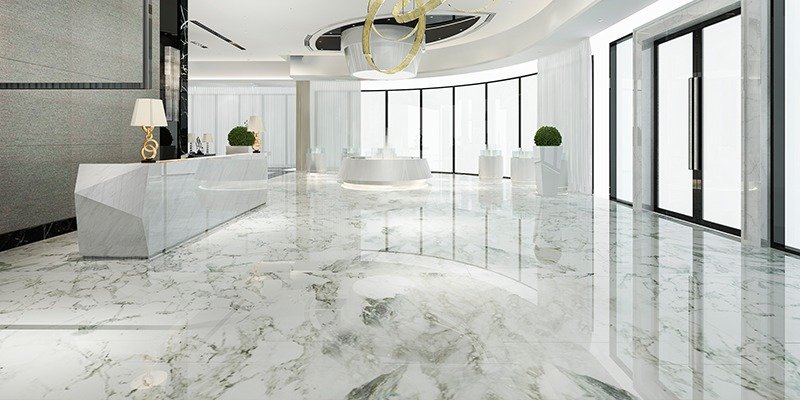
Marble is a metamorphic rock formed when sedimentary limestone undergoes immense geological heat and tectonic pressure, recrystallising calcite into a dense, veined matrix. This crystalline formation gives marble its signature depth, subtle translucence, and cooling surface underfoot, making it a perennial favourite for tropical and temperate climates alike.
From an engineering perspective, marble registers between 3 and 4 on the Mohs hardness scale. Because it is composed primarily of calcium carbonate, it remains reactive to acidic substances such as lemon juice, vinegar, wine, and harsh chemical cleaners. To preserve its finish, raw slabs require vacuum resin filling at the processing stage and periodic application of penetrating fluorochemical sealers post-installation. Sourcing authentic material through an established marble exporter in India ensures slabs undergo calibrated gauge cutting, ultrasonic flaw detection, and uniform polishing before shipping to residential job sites.
Marble excels in spaces designed for prestige and relaxation, including master living rooms, foyer entries, statement feature walls, and temple spaces. Over decades, it develops a soft patina that manufactured materials cannot replicate, and worn surfaces can be ground and re-polished on-site to restore their initial brilliance.
Assessing Granite: Unyielding Durability for High-Traffic Zones
Granite represents the pinnacle of igneous rock durability, formed by the slow crystallisation of subterranean magma rich in quartz, feldspar, and mica. This high quartz concentration places granite at 6 to 7 on the Mohs hardness scale, providing exceptional resistance to abrasion, impact, scratching, and thermal shock.
In functional areas like residential kitchens, outdoor patio decks, utility passages, and heavy-use stairwells, granite outperforms nearly every alternative surface. Hot cookware placed directly on polished granite will not blister, discolour, or crack the stone. Furthermore, dark fine-grained granites exhibit low water absorption rates, making them naturally resistant to deep liquid staining when sealed correctly during fabrication. Working alongside a reputable granite exporter in India guarantees access to dense, structurally sound slabs quarried from premium deposits, free from micro-fissures and excessive structural variations.
While granite delivers unmatched utility, its dense crystalline composition makes dry cutting and bullnosing labour-intensive, requiring diamond-tipped tooling and skilled masons for precise edge profiles and seamless joint alignment.
Vitrified Tiles: Engineered Consistency and Rapid Installation
Vitrified and porcelain tiles are factory-made ceramics composed of finely ground clay, feldspar, silica, and quartz pressed under high hydraulic pressure and fired at temperatures exceeding 1200 degrees Celsius. This manufacturing technique melts the silica, creating a glass-like vitrified body with water absorption rates below 0.5 percent.
Tiles offer clear operational conveniences for modern urban construction:
- Precise factory calibration ensures dimensional consistency across batches, reducing on-site cutting waste and facilitating narrow grout lines.
- Glazed top coats provide total resistance against household acids, oils, and pigmented liquids without necessitating topical sealers.
- Thinner slab profiles reduce the dead load on high-rise building slabs and simplify renovations over existing subfloors.
- Modern digital printing replicates natural textures, concrete finishes, and wood grains with high visual clarity.
Despite these advantages, tiles remain brittle under concentrated point-load impacts. A dropped cast-iron pan or heavy tool can chip the glazed surface, exposing the underlying bisque, which cannot be resurfaced or buffed out; the damaged tile must be broken out and replaced. Furthermore, grout joints accumulate grime over time, requiring periodic pressure washing or grout restoration to maintain clean lines.
Selecting Raw Slabs and Large-Scale Formats
Architects and luxury homeowners executing custom estates often prefer sourcing monolithic blocks rather than standard off-the-shelf tiles. Sourcing directly from an experienced natural stone block exporter allows project teams to coordinate book-matched feature walls, seamless continuous-vein flooring layouts, and custom-carved architectural elements like solid washbasins, turned balusters, and single-piece threshold steps. Raw block selection at the quarry source guarantees chromatic uniformity across sprawling square footage, an advantage impossible to achieve with piecemeal tile lots that vary between production runs.
Practical Room-by-Room Decision Matrix
Kitchen worktops demand granite or engineered quartz due to persistent exposure to cutlery, oil splatters, and boiling pots. Bathrooms and shower stalls perform well with non-slip honed granite or anti-skid vitrified tiles, which resist standing water without requiring frequent sealing. Living rooms, private corridors, and internal courtyards benefit from the natural thermal dissipation and visual prestige of premium marble.
Balancing initial purchase cost, structural weight, local mason expertise, and maintenance tolerance ensures your chosen flooring material enhances both your daily living experience and long-term residential property valuation.